





Go placidly amid the noise and the haste, and remember what peace there may be in silence. As far as possible, without surrender, be on good terms with all persons. Speak your truth quietly and clearly; and listen to others, even to the dull and the ignorant; they too have their story. Avoid loud and aggressive persons; they are vexatious to the spirit. If you compare yourself with others, you may become vain or bitter, for always there will be greater and lesser persons than yourself. Enjoy your achievements as well as your plans. Keep interested in your …
Category: Books
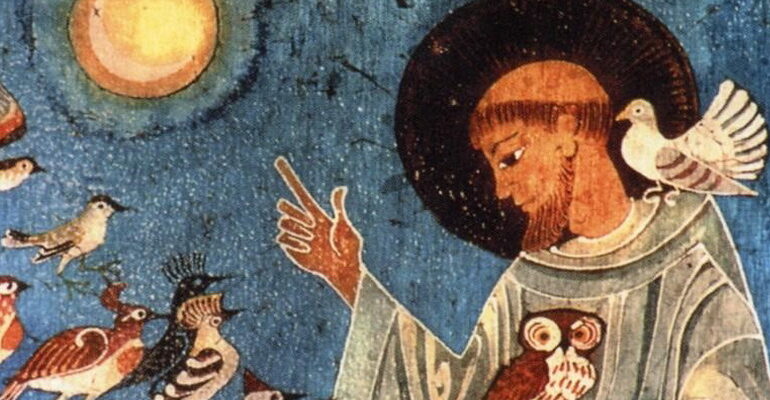
The patron saint of ecology, Francis d’Assisi’s love of nature, and new ways of living together set forth by the eminent neuropsychiatrist Boris Cyrulnik Living in times of an unstoppable disease pervading the earth, it has become imperative to peruse our fragile relation with nature, and to collectively revive our old values says the eminent neuropsychiatrist Boris Cyrulnik : Crises are very common in the human condition. We have already known many epidemics which have forced cultural revolutions… With each epidemic, or natural disaster, there has been a cultural change. After the trauma, we are forced to discover new …
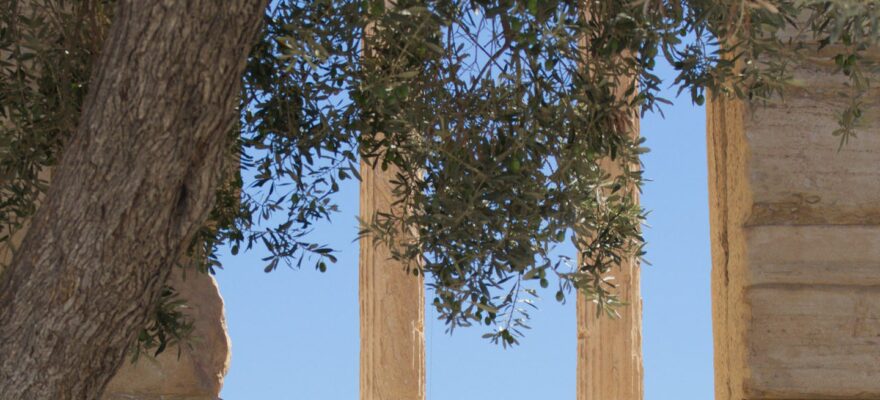
The myth has it that long long time ago, a big contest was going to be held for winning the patronage of the city of Athens and its surrounding territory, Attica. The contest was to take place under the presiding witness of King Cecrops, the founder of Athens. The crowd gathered at the Temple of Parthenon which rose on the rocky hilltop overlooking the city of Athens. The two candidates of the glorious contest were Athena, the goddess of justice, wisdom and war skills, and Poseidon, the god of the seas. To win the guardianship of the city, Athena and …
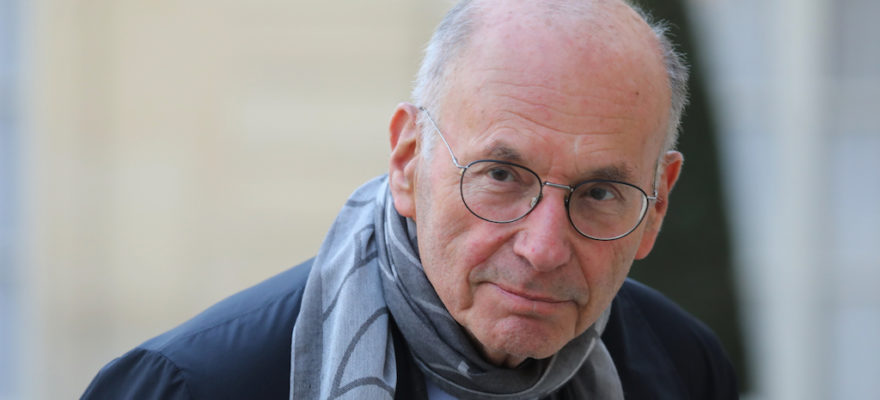
“We are obliged to change and rethink the whole civilization,” says Boris Cyrulnik, the eminent neuropsychiatrist known for his work on resilience and trauma. Our culture has lost the compass, we navigate by sight, jostled by events […] We must take a new direction because we have just understood that man is not above nature, he is in nature. Physically, psychologically and spiritually we are much more sculpted than we think by our natural space. He focuses on healing the soul in his latest book, Souls and Seasons, and marks “psychological ecology” as the crucial component of the remedy …
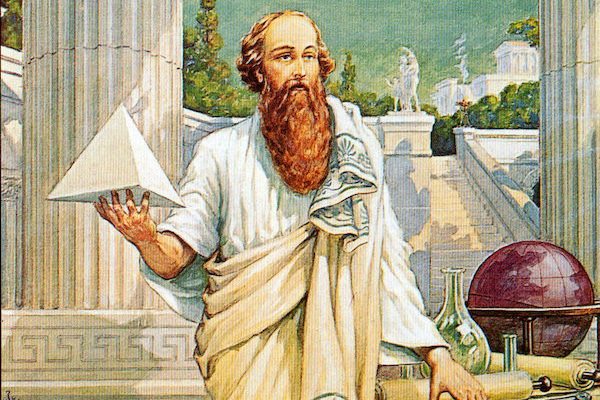
There is geometry in the humming of the strings, there is music in the spacing of the spheres. Pythagoras (circa 570 BC), the sage philosopher and polymath was born on the Greek island of Samos. Renown by his fundamental theory of mathematics and his studies on the pre-existing link between music and mathematics, he demystified the music of the planets of our solar system which he defined as musica universalis – the music of the spheres. Attesting to the fact that the planets and stars move according to mathematical equations, their movement correspond to musical notes and each emit their …
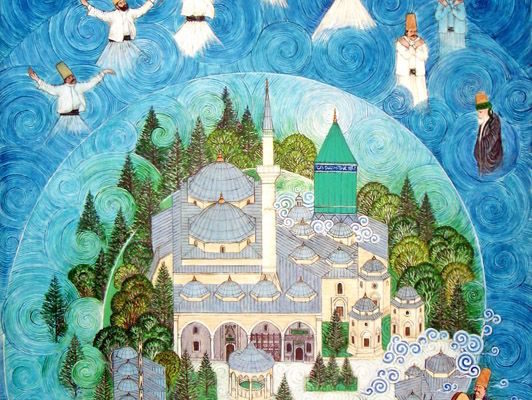
One of the most read and quoted Persian poets of the 13th century, Mevlâna Mohammad Jalal al-dîn Rumi, known as Rumi was a savant and mystic. Born in Balkh region, today’s Afghanistan (1207-1273), he and his family moved to Konya, Turkey after the Mongol conquest. Soon after his settlement in Konya, mystics, and Sufi dervishes gathered around him to benefit from his spiritual and intellectual knowledge. The spiritual life was embedded in the daily material life of the dervishes. Their gatherings were accompanied by spiritual music and dancing. It is during this period he is called “ Mevlâna” – meaning …
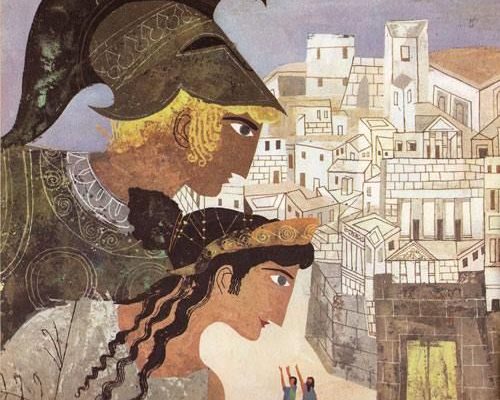
“Hateful to me as the gates of Hades is that man who hides one thing in his heart and speaks another” wrote Homer in his timeless epic Iliad, which is considered as a pillar of ancient Greek literature. This outstanding masterpiece, presumed to be written around 700-800 BC, is set during the Trojan War, the ten year siege of Troy by the allied Greek kingdoms under the rule of Agamemnon. The myth begins with the beauty contest between Aphrodite, Athena and Hera. Aphrodite promises the jurist, Paris that should he elect her as the winner of the contest, then he …

It is necessary, for the sake of the forward march of the human race, that there should be proud lessons of courage. The legendary French writer and poet Victor Hugo (1802-1885), in his eternal book Les Misérables, portrays the nature of hesitation and indecision likening to a cat’s pause : Everyone has noticed the taste which cats have for pausing and lounging between the two leaves of a half-shut door. Who is there who has not said to a cat : ‘Do come in !’ There are men who, when an incident stands half-open before them, have the …
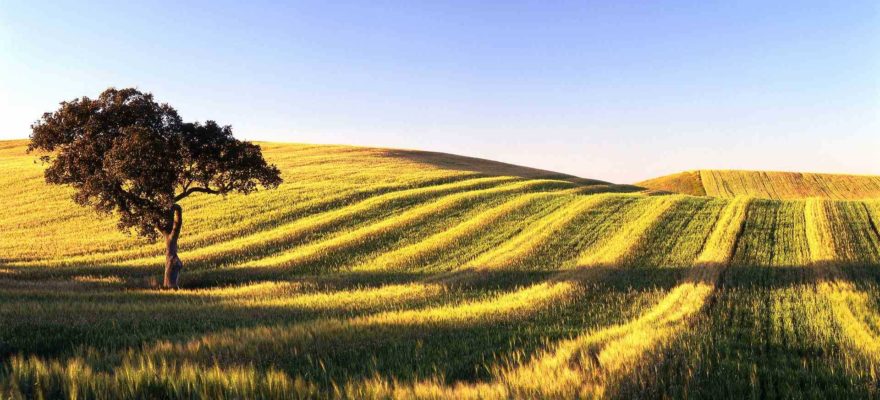
“How easy to become learned, how difficult to become truly human.” Ostad Elahi, thinker, judge, and remarkable musician of the 20th century, having spent his lifetime studying the essence and core principles of religions and the universal sayings of the sages, he conveys the quintessence of all religions : The religions differ only in their secondary aspects; otherwise, their fundamental objective and principles are the same. What is unique about his thought is that he did not contend with the theoretical perspective of matters which he studied so meticulously. Instead, he experimented the veracity of these principles in …
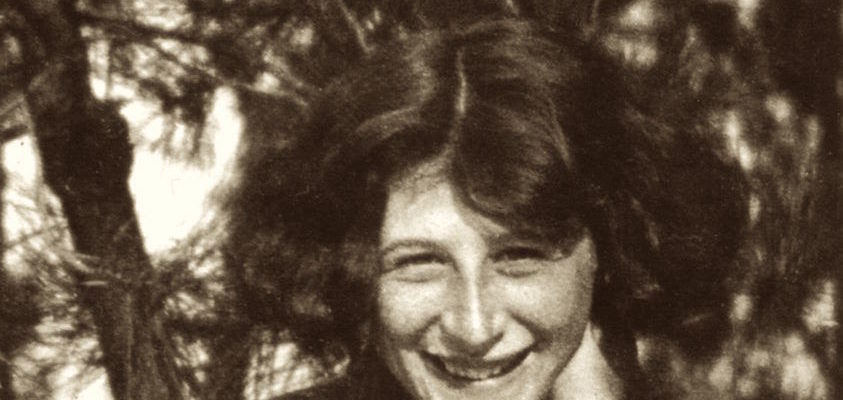
“It is human affliction and not pleasure which contains the secret of the divine wisdom. In general, we must not wish for the disappearance of any of our troubles, but grace to transform them. For men of courage, sufferings are often a test of endurance and of strength of soul. ” The French philosopher and social activist Simone Weil (1909-1943) who lived in the midst of the world wars in Europe was described by many as a saint-like personality. Learned in ancient Greek, Latin and Sanskrit, she studied the sacred texts of the major religions and encountered mystical love during …


Social Profiles